TWO AWC-OWNED UNITS
Commercial equipment for the next step.
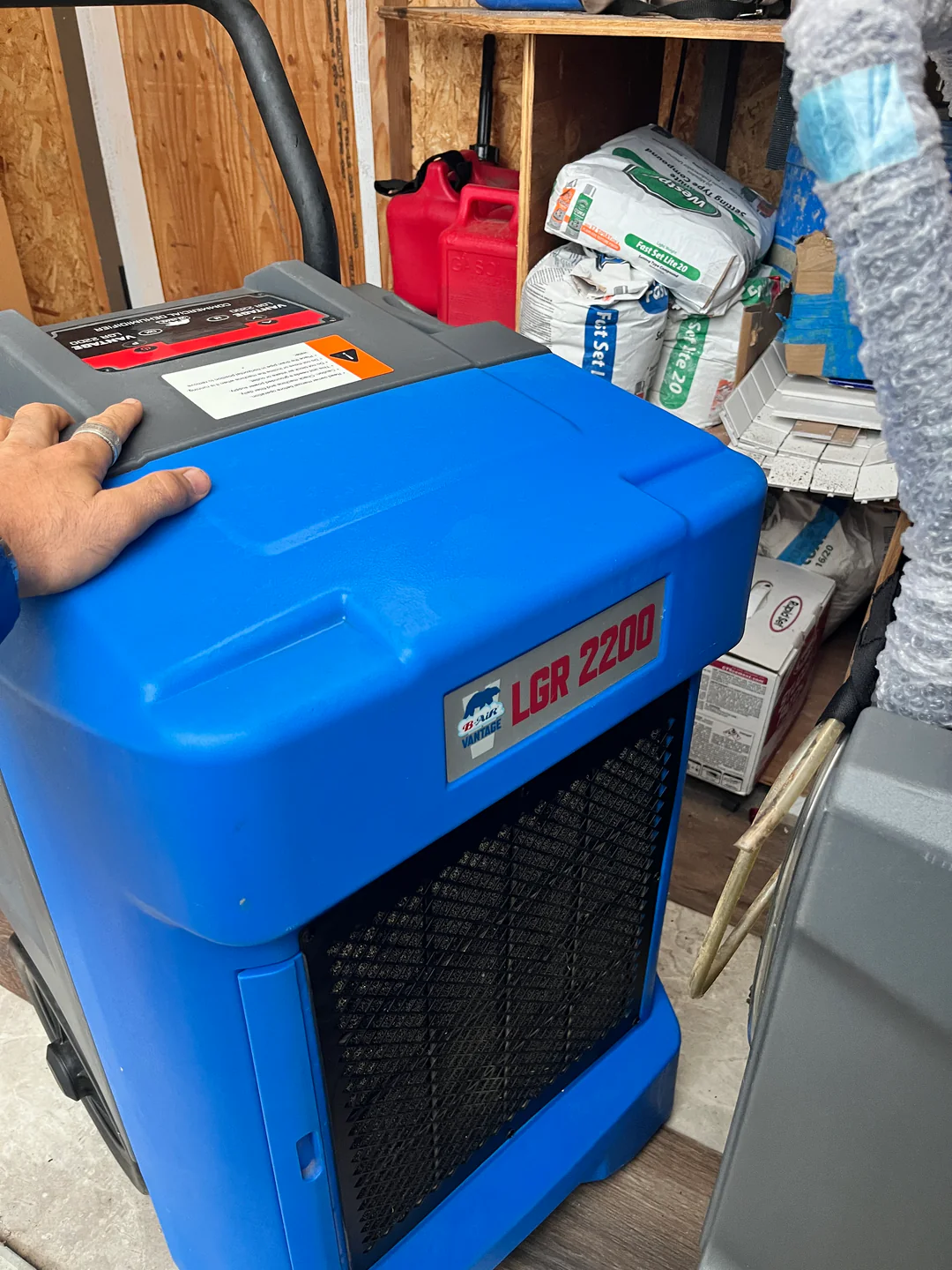
We own two B-Air Vantage LGR 2200 commercial dehumidifiers. Both have been tested by AWC and confirmed to operate. These units remove moisture from the air and can support drying where the water source and site conditions allow.
Tell us what got wet and where the property is so we can review the fit and current equipment availability.
Drying support after standing-water removal
Dehumidification lowers moisture in the air. It can help a suitable enclosed area dry after the source is controlled, standing water is removed and any required cleanup is addressed. Equipment placement is a separate decision from pumping.
The water source, affected materials, temperature, humidity and airflow all affect the result. Wet flooring, insulation, cabinets or concealed wall cavities may need additional evaluation, material removal or specialized drying. We do not promise a fixed drying time or certify that the building is dry based on equipment run time.
If water is still collecting, start with standing-water removal. If it entered through the garage, review garage flooding and the entry path.
Up to 20 hours included with flood response.
The included period is measured by elapsed time from setup, not by a machine operating-hours counter. It is an equipment-use benefit when we leave a unit during the same flood-response visit; it does not make the flood-response work itself free.
What we review before leaving equipment
- The source of the water and whether contamination is suspected.
- What materials got wet and whether specialist cleanup or drying is needed.
- Safe access, a suitable power supply and an appropriate equipment location.
- A safe condensate-drainage route without leaks or trip hazards.
- The authorization contact, access for pickup and whether continued rental is wanted.
We confirm the equipment placement, setup time and pickup plan with the person authorizing the work. For managed properties, identify the onsite contact and access arrangements before the visit. See AWC property-management flood response.
When more than a dehumidifier is needed
Do not enter floodwater to operate electrical equipment. Suspected electrical exposure, sewage, chemicals, visible mold, unsafe structures or unknown contamination need the appropriate qualified provider before equipment placement. Dehumidification does not clean contaminated materials or make an unsafe area safe.
Full restoration, specialized structural drying, moisture mapping, mold or asbestos remediation, sewage cleanup and clearance are outside this equipment-support offer. A specialist may need to assess concealed materials and decide when repair can begin. Our water removal versus restoration guide explains those separate steps.
Drying and source repairs belong in the same plan
Before closing a wall or replacing a finish, address why water entered and any remaining moisture or contamination. AWC can then quote defined construction repairs separately. Explore the AWC repair resources below for drywall, plumbing, concrete, gutters and stucco. Repairs need their own written scope and approval.
